

How Long Do Solar Flood Lights Last? (2025 Complete Lifespan Breakdown)
Introduction
Understanding the lifespan of solar flood lights is essential before purchasing them for gardens, parking lots, warehouses, sports areas, construction sites, or residential security. Buyers often ask:
- “How many years can a solar flood light last?”
- “Do batteries wear out quickly?”
- “Will the panels degrade in sunlight?”
This 2025 updated guide explains the realistic lifespan of each component, what affects durability, and how to maximize performance over the years.
Internal links for SEO clustering:
- Read our Ultimate Guide to Solar Flood Lights 2025
- Comparison reference: Solar Flood Light vs AC Flood Light — Full Comparison
Product link:
- Recommended long-lifespan product: OKELI 300W Solar Flood Light
How Long Do Solar Flood Lights Last?
1. Short Answer: 5–10 Years (Depending on Components)
A modern, high-quality solar flood light typically lasts:
- Solar panel: 15–25 years
- LED chips: 50,000–100,000 hours (8–12 years)
- Battery: 2–5 years (depending on type and climate)
- Controller & circuitry: 5–10 years
Overall realistic lifespan: 5–10 years, assuming proper maintenance and quality components.
2. Lifespan of Each Solar Flood Light Component
2.1 Solar Panel Lifespan
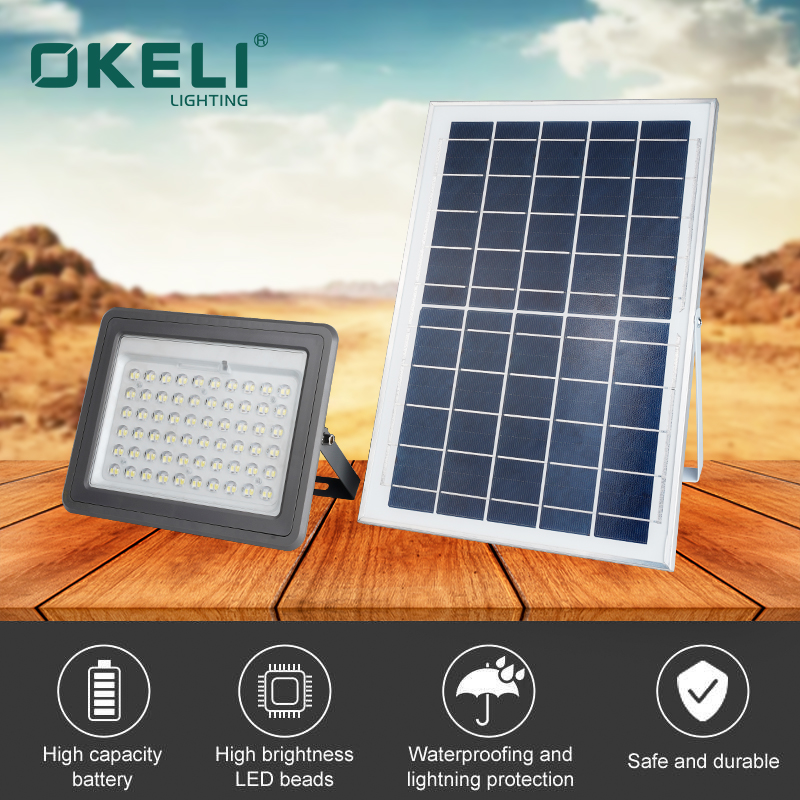
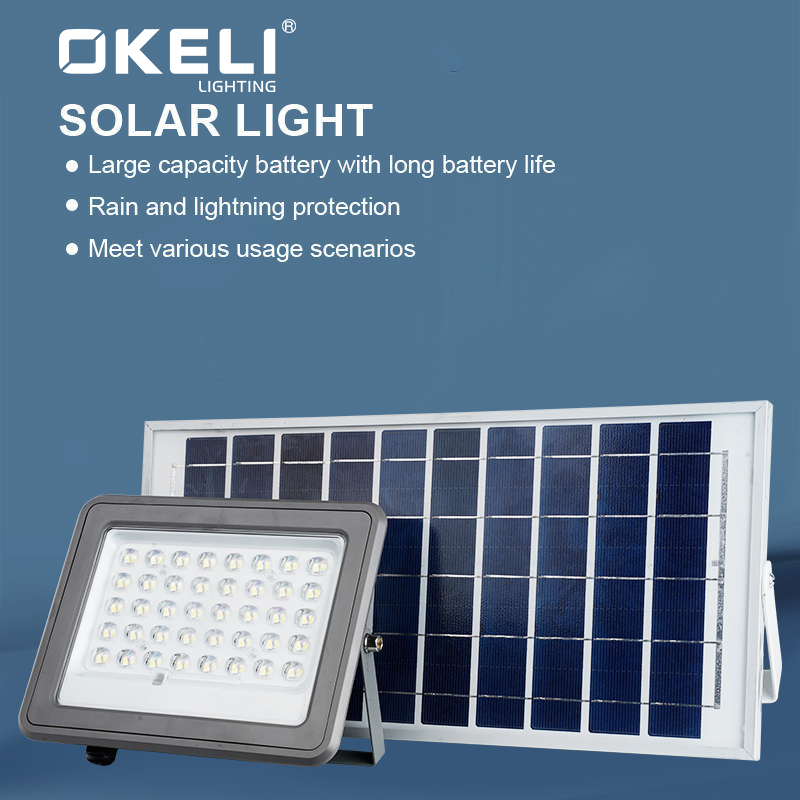
Monocrystalline solar panels used in 2025 solar flood lights generally last 20+ years.
Degradation rate per year: 0.3–0.5%.
Why they last long:
- UV-resistant glass
- Weather-sealed aluminum frame
- Minimal moving parts
Panels rarely fail first—the battery usually does.
2.2 LED Chip Lifespan
High-quality LEDs (Lumileds / Bridgelux) last:
- 50,000–100,000 hours
- Equivalent to 8–12 years of nightly lighting
LEDs degrade slowly over time, becoming slightly dimmer, but not failing suddenly.
2.3 Battery Lifespan
Battery is the most important and most vulnerable component.
Typical lifespans:
- Lithium Iron Phosphate (LiFePO₄): 4–6 years
- Lithium-ion (Li-ion): 2–4 years
- Lead-acid (older models): 1–2 years
LiFePO₄ is the best choice for long-term outdoor use due to:
- High cycle life (2,000–3,000 cycles)
- Excellent heat resistance
- Slow degradation
OKELI Lighting products primarily use LiFePO₄ batteries, making them suitable for multi-year performance.
2.4 Solar Controller Lifespan
The controller manages:
- Charge regulation
- Voltage protection
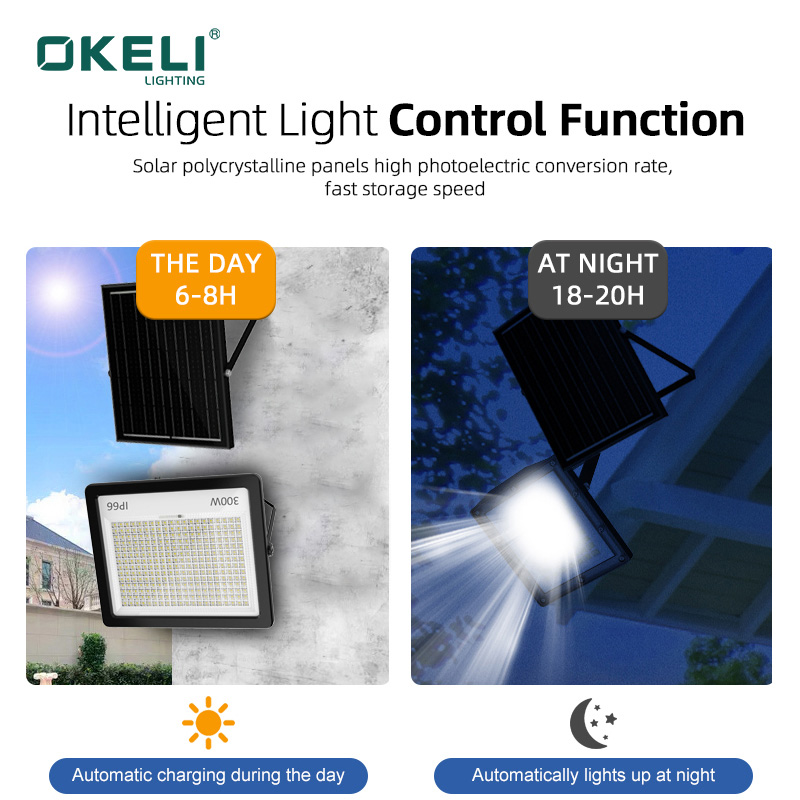
- Auto-lighting functions
With MPPT or PWM systems, lifespan ranges 5–10 years, depending on heat exposure and water protection.
3. Factors That Affect Solar Flood Light Longevity
3.1 Climate Conditions
Hot climates reduce battery lifespan faster.
Cold environments can slow performance but usually cause less long-term damage.
Key risks:
- Extreme heat (> 45°C)
- Coastal salt corrosion
- Monsoon humidity
- Dust accumulation on panels
3.2 Battery Quality
Cheaper solar lights often use low-grade batteries, leading to:
- Quick capacity drop
- Reduced nighttime brightness
- Shorter overall lifespan
Higher-quality models with LiFePO₄ maintain >80% capacity after 2–3 years.
3.3 Installation Angle & Exposure
Incorrect panel orientation reduces charging efficiency, causing deeper battery discharge daily, which accelerates aging.
3.4 Maintenance Frequency
Simple maintenance extends lifespan significantly:
- Clean the panel monthly
- Check mounting brackets yearly
- Ensure cables stay dry and undamaged
4. Signs Your Solar Flood Light Needs Replacement
4.1 Shorter Lighting Duration
If your light used to last 12 hours but now lasts only 4–6 hours, the battery is likely degrading.
4.2 Dimmer Output
Persistent dim lighting even after sunny days often indicates battery or LED degradation.
4.3 Flickering
Often caused by controller issues or failing battery cells.
4.4 Charging Indicator Behaving Abnormally
Fast charging to “full” or staying “charging” all day both signal potential issues.
5. Can You Replace the Battery to Extend Lifespan?
Yes—many high-quality solar flood lights allow battery replacement.
Replacing only the battery can extend the product life an additional 2–5 years.
When replacing:
- Choose the same voltage
- Match or exceed the original mAh capacity
- Prefer LiFePO₄ for durability
6. How to Maximize Solar Flood Light Lifespan (Expert Tips)
6.1 Install the Solar Panel Correctly
- Face south (Northern Hemisphere) / north (Southern Hemisphere)
- Tilt 30–45°
- Avoid shade from trees and buildings
Correct positioning reduces stress on the battery.
6.2 Clean the Panel Regularly
Dust and debris can reduce charging efficiency by 20–40%.
Clean monthly with water and a soft cloth.
6.3 Avoid Extreme Heat
If possible, place the battery housing in shaded areas to minimize thermal stress.
6.4 Use Lights With MPPT Charging
MPPT increases charging efficiency by 20–35%, resulting in healthier battery cycles and longer lifespan.
Learn more: Ultimate Guide to Solar Flood Lights 2025
7. Recommended Long-Lifespan Solar Flood Light
Key benefits:
- 40W large external solar panel
- 34,000mAh LiFePO₄ battery
- MPPT controller
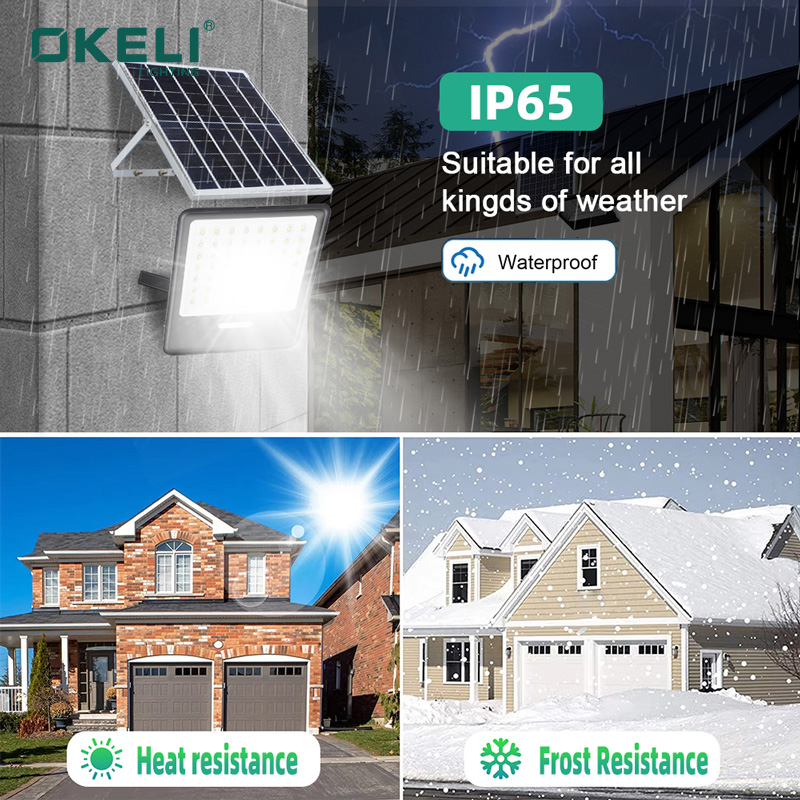
- IP66 waterproof
- 50,000-hour LED lifetime
- Designed for long-term outdoor performance
Solar flood lights typically last 5–10 years, depending on battery type, climate, maintenance, and build quality. With LiFePO₄ batteries, MPPT charging, and proper installation, the lifespan can extend significantly, making solar flood lights a long-lasting and cost-effective outdoor lighting solution.
Internal link summary (SEO cluster reinforcement):
Related Products


Author introduction

Dear Customer:
My name is Raymond, Sales Director at Okeli Lighting. With 10+ years of dedicated expertise in the LED lighting industry, I bring the technical acumen and market insights to elevate your projects. Expert in street light system configuration, lighting design and flood light technology support. Feel free to contact me. I’m happy to provide you with the best service and products


