How Bright Should Solar Flood Lights Be?
Choosing the Right Brightness Level for Outdoor Illumination, Security, and Landscaping
Brightness is the first feature customers examine when choosing a solar flood light. However, many buyers do not understand what lumen ratings represent or how many lumens they actually need for different outdoor scenarios. Since solar flood lights vary widely from 200 lumens to over 5000 lumens, selecting the wrong brightness level can lead to poor visibility, wasted energy, or shortened battery life.
This comprehensive 2025 lumens guide explains how bright solar flood lights should be according to use cases, coverage area, height, beam angle, battery capacity, and solar panel size. By the end, you will know exactly which lumen level is suitable for gardens, parking areas, warehouses, walkways, security zones, and commercial locations.
What Are Lumens and Why Do They Matter?
Lumens measure the amount of visible light a lamp emits. Higher lumens mean a brighter flood light. Unlike watts, which indicate energy consumption, lumens show actual brightness output. Therefore, lumens are the most important metric for judging solar flood light performance.
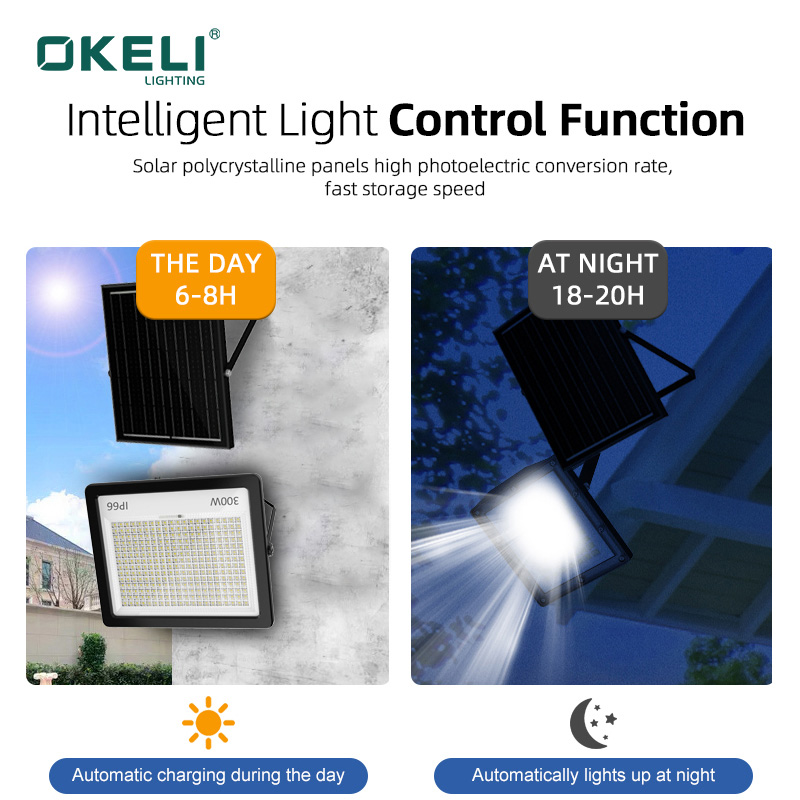
Solar lights convert sunlight into electricity, store it in a battery, and use that battery to power LED beads at night. Since solar energy is limited, choosing the correct lumen level ensures strong illumination without draining the battery too quickly.
Many users believe that “higher lumens are always better,” but this is not true. The right brightness level depends on the installation environment and the coverage area needed.
Recommended Lumens for Different Outdoor Applications (2025 Guide)
Below is a complete breakdown of the ideal brightness range depending on the intended usage.
1. Garden Pathways & Decorative Landscaping
Recommended brightness: 200–500 lumens
This level creates soft illumination without being harsh. It highlights plants, pathways, garden features, and small seating areas. Because these lights run in low-brightness mode, they consume very little energy and offer stable nighttime runtime.
These models usually come with a small solar panel and a compact lithium battery, which is enough for decorative purposes.
2. Residential Yard & Driveway Lighting
Recommended brightness: 600–1200 lumens
Homeowners need more brightness for visibility and safety when walking, driving, or monitoring their property. A 600–1200 lumen solar flood light provides sufficient clarity without disturbing neighbors.
To improve efficiency, choose a model with a wide 120°–140° beam angle and a PIR motion sensor, so it lights up only when needed. Motion mode ensures excellent brightness while preserving energy.
3. Home Security & Motion-Activated Areas
Recommended brightness: 1200–2500 lumens
Security lighting requires higher brightness to identify people, animals, or potential intruders. A flood light in this range illuminates driveway entrances, fences, garage doors, and backyard areas effectively. Motion sensors dramatically boost efficiency by providing full brightness only when triggered.
For long-lasting performance, select models with:
- High-efficiency monocrystalline solar panel
- 3.2V LiFePO4 long-cycle battery
- Adjustable panel angle
- Waterproof rating IP65–IP67
These allow you to maintain strong illumination even in cloudy months.
4. Large Yards, Farms, and Open Spaces
Recommended brightness: 2500–4000 lumens
To cover wider outdoor spaces, you need higher lumen output, typically from bigger LED modules. These lights often come with external solar panels of 20–40 watts and high-capacity batteries.
They are commonly installed at heights of 4–6 meters to maximize distribution. The larger the area, the higher the brightness required to avoid dark spots.
5. Commercial Use: Warehouses, Parking Lots, Loading Zones
Recommended brightness: 4000–6000 lumens
Commercial users need strong illumination to ensure employee safety and operational efficiency. High-lumen solar flood lights in the 4000–6000 lumen range provide reliable coverage for:
- Parking spaces
- Storage yards
- Loading docks
- Security checkpoints
- Building entrances
Because these lights operate at high power, they require bigger solar panels and advanced thermal management to prevent overheating.
6. Sports Areas, Community Parks & Public Facilities
Recommended brightness: 6000+ lumens
High-power solar flood lights can illuminate playgrounds, community parks, basketball courts, and public event spaces. These industrial-grade models often include:
- Multiple LED arrays
- Oversized 30–60W solar panels
- High-capacity lithium batteries
- Intelligent power management systems
Although they provide intense lighting, they still operate silently and without electrical wiring, making them suitable for areas where traditional power is difficult to install.
Important Factors That Influence Brightness Requirements
Choosing the right lumen level requires more than picking the highest number. Several factors affect how bright a solar flood light will appear in real use.
1. Installation Height
The higher the installation height, the more lumens you need. As lighting spreads, brightness per square meter decreases.
General rule for 2025 models:
- 2–3 meters: 400–1500 lumens
- 3–4 meters: 1500–2500 lumens
- 4–6 meters: 2500–5000 lumens
- 6 meters or higher: 5000+ lumens
Selecting a lumen output that matches the height ensures even illumination.
2. Beam Angle
A wide beam angle distributes light across a broader area. However, wider angles reduce intensity.
- Narrow beam (60–90°): brighter and focused
- Wide beam (120–160°): softer, spreads farther
When choosing a solar flood light, balance beam angle with your desired coverage.
3. Battery Capacity and Voltage
Battery size directly determines how long a flood light can maintain high brightness.
When lumens are high but battery capacity is small, lights dim quickly. Therefore, it is essential to consider both lumens and battery specs. High-quality products use LiFePO4 batteries, which improve stability and lifespan.
4. Solar Panel Wattage
Solar panel size must match lumen output. Higher brightness requires more charging energy.
General solar panel recommendations:
- 500–1200 lumens: 5–8W panel
- 1200–2500 lumens: 10–20W panel
- 2500–4000 lumens: 20–40W panel
- 4000+ lumens: 40W+ panel
A balanced system ensures full nighttime operation.
5. Lighting Mode
Most 2025 solar flood lights have multiple modes:
- Full brightness
- Half brightness
- Motion-activated burst
- Low-brightness all-night mode
- Automatic brightness adjustment
Motion mode is especially effective for high-lumen lights, extending battery life dramatically.
How to Calculate Coverage Area Based on Lumens
To determine coverage, divide lumens by 10–20 to estimate the illuminated square meters. For example:
- 1000 lumens → roughly covers 50–80 m²
- 3000 lumens → roughly covers 150–250 m²
- 6000 lumens → roughly covers 300–500 m²
This guideline helps you match brightness to area size.
Common Mistakes When Choosing Brightness
Many buyers make errors when selecting lumen levels. These include:
1. Choosing Maximum Lumens Without Considering Battery Size
High brightness is useless if the battery cannot support it.
2. Installing High-Lumen Lights Too Low
This creates glare and reduces visibility.
3. Using Low-Lumen Lights for Security
Decorative lights cannot deter intruders effectively.
4. Ignoring Beam Angle
Beam angle changes how bright the space feels.
5. Misunderstanding LED Efficiency
Not all 3000-lumen lights are equal. LED quality varies significantly by brand.
Avoiding these mistakes ensures you select a model that performs consistently throughout the year.
Which Lumens Are Best for Solar Security Lights?
Security lighting requires stronger illumination to identify movement. Therefore, the recommended lumen range is:
1500–3000 lumens for residential security
3000–5000 lumens for commercial security
Pairing these lights with a sensitive PIR sensor enhances deterrence and boosts energy efficiency.
Do Higher Lumens Always Mean Better Lighting?
Not always. Higher lumens can lead to:
- Shorter battery life
- More glare
- Over-illumination
- Lower energy efficiency
The best choice is always the right lumens, not the highest number. Proper matching ensures long-lasting performance.
The Right Brightness Level Ensures Maximum Performance and Energy Efficiency
Choosing brightness for solar flood lights is not about selecting the highest lumen rating. Instead, it involves understanding space requirements, installation height, beam angle, and battery capacity. Whether you need gentle garden lighting or powerful security illumination, selecting the appropriate lumen range ensures safety, efficiency, and stable nighttime operation.
This 2025 lumens guide allows you to make informed decisions when purchasing solar flood lights for residential or commercial use. With the correct brightness level, your lighting system will deliver clear visibility, enhanced security, and long-term energy savings.
Related Products


Author introduction

Dear Customer:
My name is Raymond, Sales Director at Okeli Lighting. With 10+ years of dedicated expertise in the LED lighting industry, I bring the technical acumen and market insights to elevate your projects. Expert in street light system configuration, lighting design and flood light technology support. Feel free to contact me. I’m happy to provide you with the best service and products
Related Articles
Ultimate Guide to Solar Flood Lights 2025
Top 10 Solar Flood Lights for Outdoor Use 2025
How to Choose the Best Solar Flood Light for Your Garden (2025 Guide)
Solar Flood Light vs AC Flood Light — Full Comparison (2025 Edition)
Do Solar Flood Lights Work in Rainy or Cloudy Weather? (2025 Updated Guide)
How Long Do Solar Flood Lights Last? (2025 Complete Lifespan Breakdown)
The Best Solar Flood Lights for Security Use in 2025
Solar Panels for Flood Lights: Wattage, Angle & Battery Optimization
Common Problems with Solar Flood Lights & How to Fix Them (2025 Full Guide)